
What blown plaster is
Plaster sticks to a wall by a mechanical key: it is pushed into the pores and joints of the brick and hardens there. Blown plaster is plaster where that key has failed, so the coat is sitting against the wall rather than attached to it. It sounds hollow when tapped, it often shows a bulge or a network of fine cracks, and when it finally goes it comes away in a sheet, sometimes taking the paint and paper with it and leaving bare brick and a pile of dust behind the skirting.
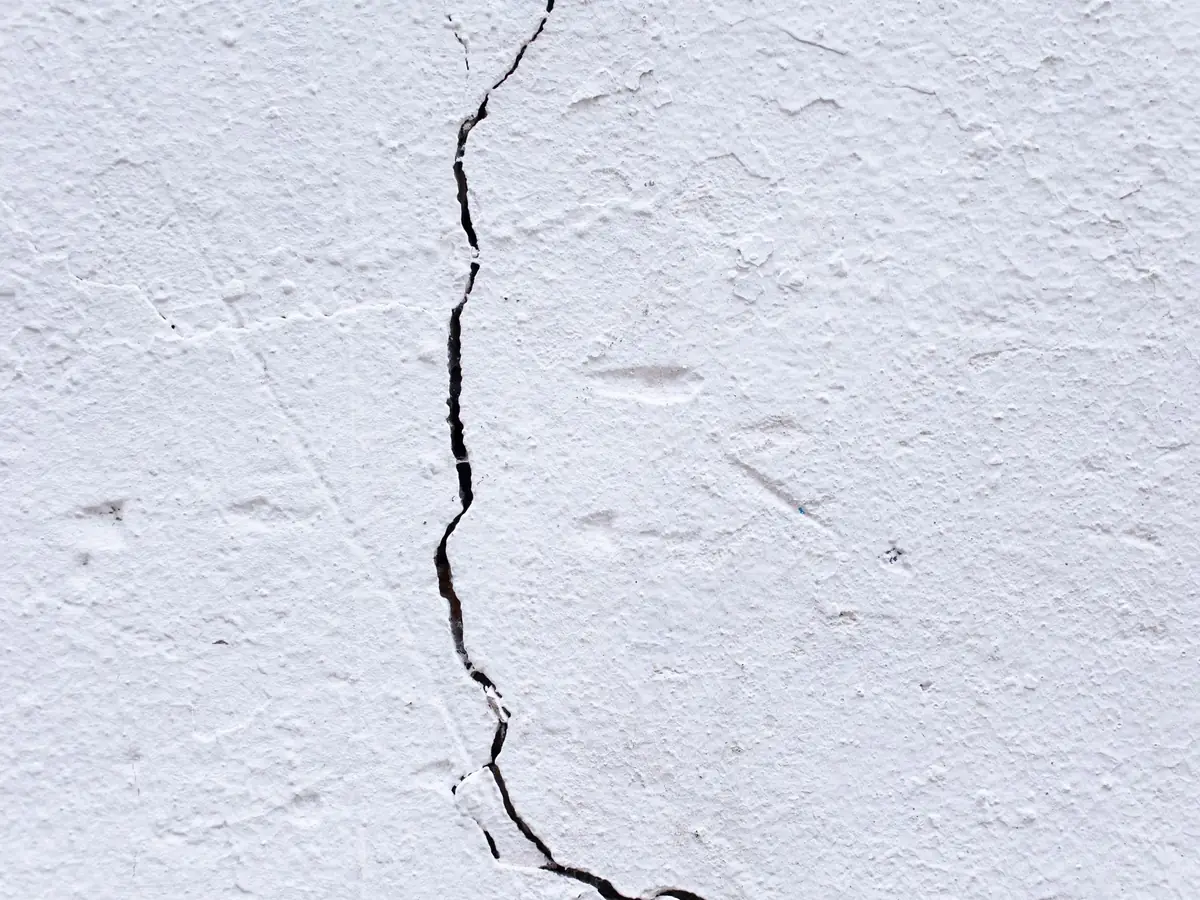
It is different from a crack. A crack in sound plaster is movement, a joint or shrinkage, and it can be filled. A hollow area with cracks in it is blown, and filling the cracks does nothing to the problem underneath.
Why it happens in Leeds houses in particular
Leeds has roughly 19,500 back-to-backs still in use and a stock that is mostly terraces and inter-war semis. The older ones have solid brick walls, no cavity and no damp course, or one that has long since been bridged by a raised path or a solid floor. They were plastered in lime, which breathes. Over the last sixty years most have been re-plastered in gypsum, painted in vinyl emulsion and, outside, either cement-rendered or cement-pointed.
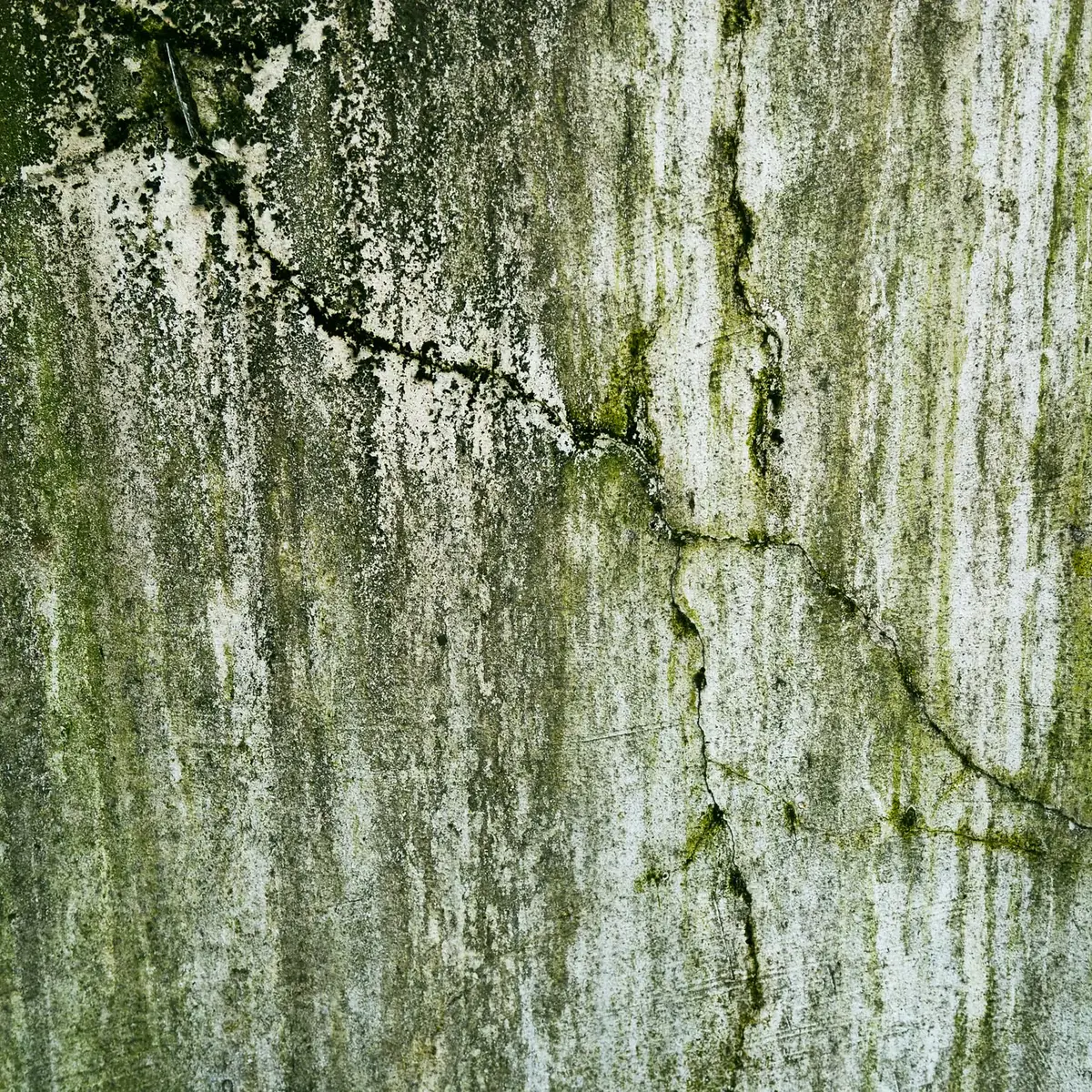
That combination traps moisture in the brick. It gets in from rain on an exposed gable, from a leaking gutter, from the ground, or simply from the air inside condensing on a cold wall. It cannot get out through the paint or the cement. The salts in the brick and the old plaster dissolve, migrate to the surface and crystallise behind the gypsum, pushing it off. The plaster blows, someone skims over it, and the cycle starts again.
Finding out how bad it is
Tap the wall with your knuckles from top to bottom and side to side. Sound plaster gives a dull, solid note; blown plaster rings hollow. Mark the hollow areas with a pencil. If they are a few patches the size of a dinner plate, the wall is repairable. If they cover most of a wall, or the whole of the bottom metre along a front or party wall, the wall needs stripping back. Look for a tide mark, salt crystals like white fur, or dark staining, which point at where the moisture is coming from.
A proper survey meters the wall for moisture and looks outside at the render, the pointing, the gutters and the ground level, because the fix for blown plaster starts with the water. That is the visit the damp and mould treatment team makes before any quote.
- Hollow sound when tapped: blown, not cracked
- White salt crystals: moisture moving through the wall
- Tide mark low on the wall: ground moisture or a bridged damp course
- Staining below a window or near a gutter: rain getting in from outside
Patch repair: when it is enough
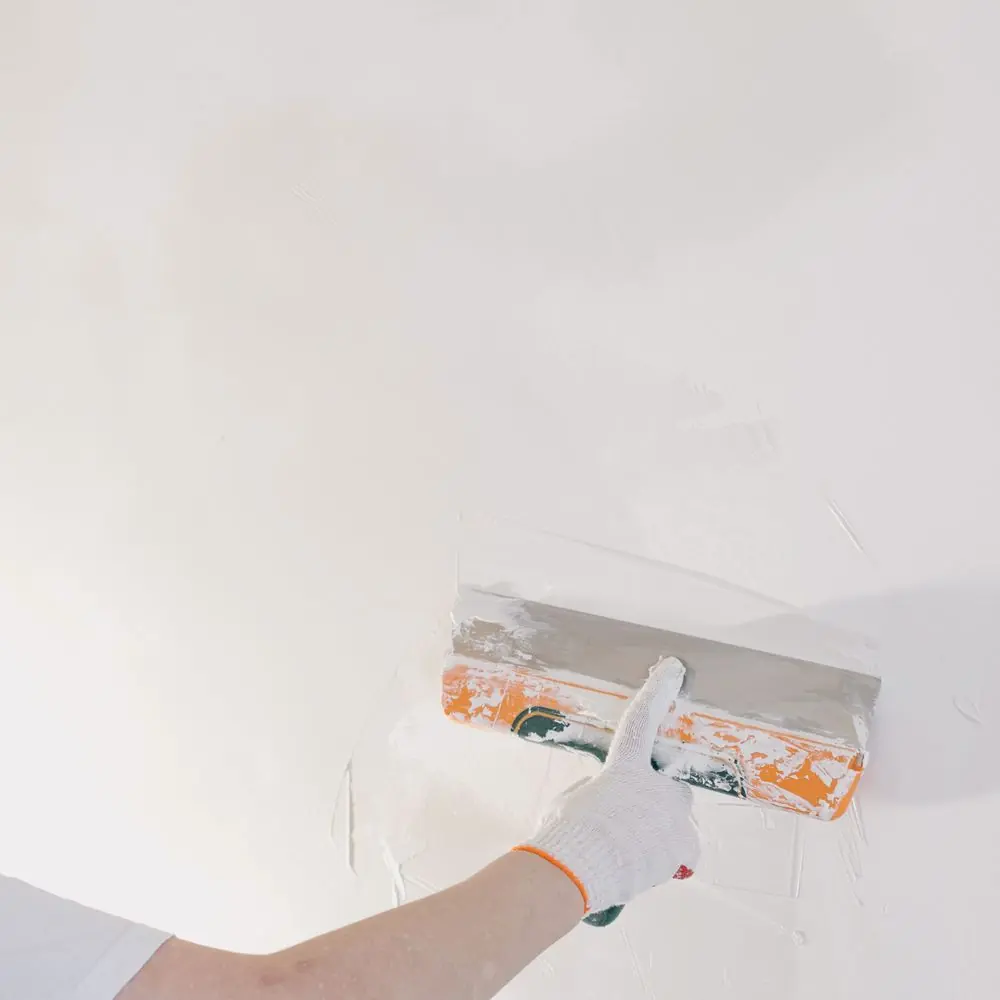
Where the blown area is small, the wall is dry to a meter, and the cause was a one-off (a leak that has been fixed, a fixing that was hammered in), a patch repair is the right job. The hollow area is cut back to sound plaster, the brick is brushed clean and dampened, an undercoat plaster is applied to bring the patch level, and the whole wall is skimmed so there is no visible join. Done properly the repair is invisible and permanent.
What makes a patch fail is patching a wall that is still wet, or patching a small area of a wall that is blown everywhere else. Both are common because both are cheaper on the day.
Hack off and float: the proper rebuild
Where most of a wall has gone, the plaster is hacked off back to brick, the brick is cleaned, raked out where the joints are soft, and left to dry until a meter says it is ready. Then the wall is floated: an undercoat plaster in one or two coats brought to a straight edge with beads at the corners, and a finish skim over the top. In a Victorian room that is usually twenty millimetres or more of new plaster, and it takes weeks to dry.
The choice of undercoat matters. On a dry wall a modern gypsum undercoat is fine. On a solid wall with any history of moisture, a breathable lime plaster or a renovating plaster designed to hold salts is what stops the same thing happening again. Putting the same gypsum back is how the wall got here.
Linings: when the wall should not be plastered at all
Sometimes the honest answer is not to plaster the wall directly. A cold front wall that condenses every winter, a party wall that is never going to be dry, or a wall so uneven that floating it would take an inch of plaster is better served by a framed lining: a stud or metal frame stood off the wall with a ventilated gap, insulation in the frame, plasterboard on the face and a skim on that. The wall behind can carry on drying, the room is warmer, and the finish is flat.
That is a drylining job rather than a plastering one, and it costs a few centimetres of room. On an insulated version it is also the fix for the condensation that started the problem.
Dealing with the cause first
None of the above lasts if the water is still arriving. Cracked cement render on a gable is stripped and replaced with a breathable system; failed pointing is raked and redone, in lime on an old wall; gutters and downpipes are fixed; a path that has been raised above the damp course is lowered or a drainage channel cut; extractor fans are fitted in the kitchen and bathroom where condensation is the cause. The external rendering side of the job is often the bigger half.
Chemical damp-course injection is sold as the answer to almost every damp wall in Leeds and is the right answer for very few of them. If a survey leads with it before looking outside, get a second opinion.